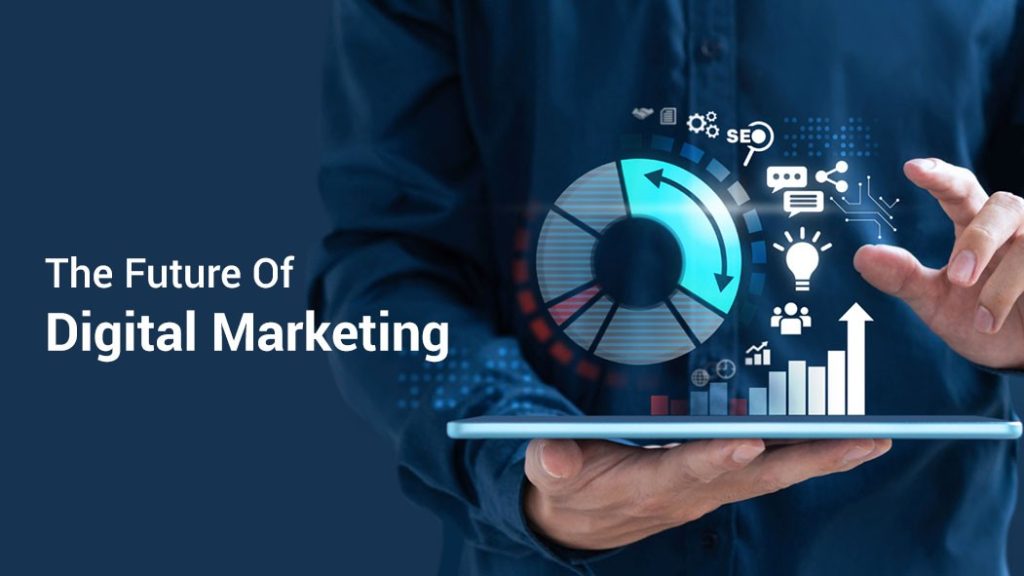
The future of digital marketing is evolving rapidly, driven by technological advancements, changing consumer behavior, and emerging platforms. Artificial intelligence (AI) and machine learning will play a key role in analyzing consumer data, predicting trends, and automating campaigns for maximum efficiency. Personalization will become more advanced, with brands delivering tailored content, offers, and recommendations in real time. Voice search optimization will gain importance as smart speakers and voice assistants become mainstream, while video marketing, especially short-form and live videos, will dominate content strategies.
Augmented reality (AR) and virtual reality (VR) will create immersive shopping and brand experiences, making customer interactions more engaging. Social media will continue to integrate with e-commerce, driving sales directly through platforms like Instagram, Facebook, and TikTok. With growing privacy regulations, marketers will need to focus on first-party data collection and transparent practices. Additionally, influencer marketing will evolve towards authenticity and niche targeting, and automation tools will simplify multi-channel marketing. Overall, the future of digital marketing will be about creating seamless, personalized, and interactive experiences that connect brands with customers in meaningful ways.
Future Trends in Digital Marketing You Can’t Ignore
1. Artificial Intelligence (AI) & Machine Learning Integration
- What’s Happening: AI is becoming the backbone of marketing, helping brands automate, personalize, and predict customer behavior.
- Key Uses:
- Predictive analytics for customer purchase patterns.
- AI-powered chatbots for 24/7 customer support.
- Automated ad targeting and budget optimization.
- Example: Netflix using AI to recommend shows based on viewing history.
2. Hyper-Personalization
- What’s Happening: Customers expect brands to speak directly to them, not just broadcast generic messages.
- Key Uses:
- Personalized email campaigns.
- Custom product recommendations.
- Location-based offers via geofencing.
- Example: Amazon suggesting products “just for you” based on browsing and buying history.
3. Voice Search Optimization
- What’s Happening: With smart speakers and voice assistants (Alexa, Siri, Google Assistant), voice search is growing rapidly.
- Key Impacts:
- Marketers must focus on natural language SEO.
- Question-based and long-tail keywords are crucial.
- Example: Optimizing for “Where is the nearest vegan café?” rather than “vegan café near me.”
4. Video & Short-Form Content Dominance
- What’s Happening: Platforms like TikTok, Instagram Reels, and YouTube Shorts are dominating user attention.
- Key Strategies:
- Snackable, vertical video content.
- Interactive live streams.
- Behind-the-scenes and authentic storytelling.
- Example: Brands using Instagram Reels for quick product demos.
5. Influencer & Creator Economy Expansion
- What’s Happening: Influencer marketing is evolving from celebrity endorsements to micro and nano-influencers.
- Key Benefits:
- Higher trust and engagement rates with niche audiences.
- Cost-effective collaborations.
- Example: A skincare brand working with micro-influencers who have strong engagement within beauty communities.
6. Augmented Reality (AR) & Virtual Reality (VR) Experiences
- What’s Happening: AR/VR are transforming how consumers try and experience products before purchase.
- Key Uses:
- Virtual try-ons for fashion and makeup.
- Interactive 3D product demos.
- Example: IKEA’s AR app lets users visualize furniture in their homes.
7. Data Privacy & Cookieless Marketing
- What’s Happening: With the phasing out of third-party cookies, marketers must find new ways to target users.
- Key Solutions:
- First-party data collection.
- Consent-based marketing.
- Contextual advertising.
- Example: Brands offering loyalty programs to collect direct customer data.