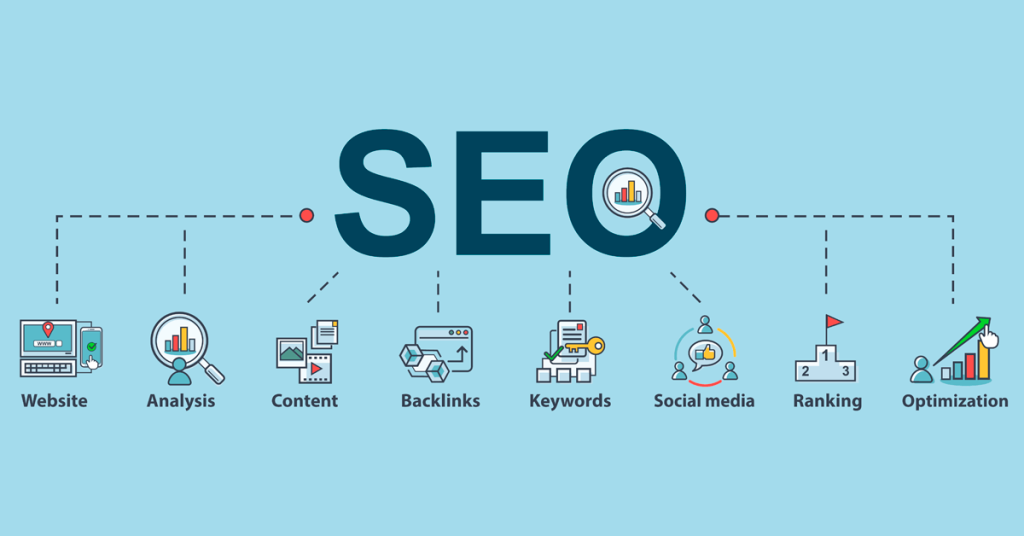
SEO is the practice of improving your website so that search engines like Google can easily find, understand, and rank it higher for specific search terms (keywords).
When done right, SEO brings you free, targeted traffic without paying for ads.
Example:
If you have a blog about cooking and you optimize for the keyword “easy pasta recipes”, your post can appear on the first page of Google when someone searches for it.
How SEO Works
Search engines follow 3 main steps:
- Crawling – Bots scan the web and discover your site pages.
- Indexing – Search engines store and organize your pages in their database.
- Ranking – Based on 200+ factors, they decide where to show your page in search results.
Your job with SEO is to make crawling, indexing, and ranking easier.
Types of SEO
There are three main categories you need to work on:
A. On-Page SEO (Optimizing your own content & pages)
- Keyword research – Find what people are searching for (e.g., “best budget smartphones 2025”).
- Title tags – Include the keyword in your page title.
- Headings – Use H1, H2, H3 structure to organize content.
- Meta description – Short summary that appears in search results.
- Content quality – Original, helpful, well-written content.
- Image optimization – Use descriptive file names & alt text.
- Internal linking – Link related pages within your website.
B. Off-Page SEO (Building your website’s reputation)
- Backlinks – Get other high-quality websites to link to your site.
- Social media signals – Share your content to boost visibility.
- Guest blogging – Write articles for other sites with a link back to yours.
- Influencer collaborations – Partner with niche influencers for mentions.
C. Technical SEO (Making your website search-engine-friendly)
- Mobile-friendly design – Works well on all devices.
- Fast loading speed – Use tools like Google PageSpeed Insights.
- SSL certificate (HTTPS) – Secure website = higher trust.
- XML sitemap – Tells search engines about your pages.
- Structured data – Schema markup to help search engines understand content.
How to Use SEO – Step-by-Step Plan
Here’s a beginner-friendly process:
- Choose Your Niche
Example: Travel tips, tech reviews, health recipes. - Do Keyword Research
- Tools: Google Keyword Planner, Ubersuggest, Ahrefs, SEMrush.
- Look for keywords with good search volume but low competition.
- Example: Instead of “pasta recipe” (too competitive), target “15-min pasta recipe”.
- Create Optimized Content
- Use your keyword in the title, URL, first 100 words, and headings.
- Add images and videos.
- Keep sentences short and paragraphs small.
- Optimize for Technical SEO
- Install an SEO plugin (Yoast SEO, Rank Math) if using WordPress.
- Improve page speed (compress images, use caching).
- Ensure mobile responsiveness.
- Promote Your Content (Off-Page SEO)
- Share on social media.
- Build backlinks by guest posting or reaching out to bloggers.
- Answer questions on Quora/Reddit with links to your site.
- Track & Improve
- Use Google Search Console to see what keywords you’re ranking for.
- Update old posts with fresh content.
- Fix broken links and errors.
Pro Tips for SEO Success
- Focus on helping users first, not just search engines.
- Be consistent — SEO results usually take 3–6 months.
- Avoid keyword stuffing (overusing keywords).
- Regularly update your site with new content.